Pages

Showing posts with label interactive math journal. Show all posts
Tuesday, October 6, 2015

Multiplication Strategies 101

How did you learn to multiply 2-digit by 2-digit numbers?  If you are like me there was only one way and that was the traditional algorithm.  I was never shown another way until I had to teach it to my fifth graders.  I remember reading the following statement: "I can demonstrate, with and without concrete materials, an understanding of multiplication (2-digit by 2-digit) to solve problems.  I remember thinking how am I going to help my students understand this process when I was only taught one way myself.  After a lot of reading, I not only found many great ways to help my students with learning this skill but I found that very few of my students chose the traditional algorithm as their go to multiplication strategy.  Read below to discover some of the ways I now teach 2-digit by 2-digit multiplication and which one became my students absolute favorite!


Array Method


Students make an array using base ten blocks to model the numbers.  They then divide the array into four parts that are easier to calculate.  Finally, they add the four products to get the answer.  My students love trying to figure out my mystery arrays.  You can find these interactive math notebook resources here.

Box Method


Some teachers prefer to call the array method the box method as well.  After modelling many problems using the base ten blocks, I like to move to the box method.  It follows the same method however,  I find it speeds up the process.  Students draw a rectangle and divide it into 4 parts.  They label the box showing tens and ones along the sides.  They then multiply the numbers and add the answers altogether.  I find providing students with small white boards and markers is a great way to teach this strategy.

Partial Products


Some of my students experienced difficulty with this method at first but with the scaffolding provided by using boxes as a guide they soon mastered this method.  The important thing to remember to stress when teaching this method is how to record the numbers.

Lattice Method


This method may look complicated but it is really not that hard once you learn to draw the boxes.  This method has become my students absolute favorite method to multiply.  Even my students' parents loved it once they saw how it was done.  I found watching YouTube videos was the best way for me to master this one.  You can see how it works by clicking here.

Traditional Algorithm


I still teach my students how to multiply using the traditional algorithm as this is the method most of their parents will show them at home or understand from their school days.  I have found that by teaching all the other strategies first it gives my students a much better understanding of this method.  

I have found that by letting my students have the choice as to which multiplication strategy they understand the best and then using it to solve multiplication problems has resulted in increased confidence and accuracy when multiplying.


I hope this helps you to master multiplication strategies of 2-digit by 2-digit multiplication.  Maybe the lattice method will become your new favorite way to multiply!


Monday, April 13, 2015

3 TIPS for Kinder Math Success


Hi EVERYONE!  It’s Kimberly from Loving Kinders!  I am very grateful to be posting as a guest author today at Who’s Who and New.   I LOVE THIS blog.  It gives us so many amazing tips and tricks.  So, today I wanted to share with you my tips when teaching math!

#1 Engage THE Learner
I find Interactive Notebooks are a great way to ENGAGE my students.  Actually, they are a HUGE hit in my class. 
This is why:
I put the students in charge. -They LOVE THIS! I use a document camera and allow one student to be the “teacher model” and they assemble the page for the class. We note ALL of the steps on the board and the students take off on their page.
Now Be AWARE!
I will tell you that Interactive Notebooks in kindergarten are NOT easy so don’t get involved if you don’t want to take TIME to TEACH each child how to assemble the pages and to show them your OWN expectations. For instance, we cut triangles on each page for bookmarks, we ONLY use glue sticks, and we NEVER rush with our work.
My students are experts now!
Now, every TUESDAY we have our interactive notebook time and my kinders are
ENGAGED and PROUD!


#2 EVERYONE needs to respond
I am sure that you agree, when teaching any subject area if you only call on one person for an answer then only ONE person is engaged. That is why I always use
TURN AND TALK
OR
-my new FAV-
LEAN AND TELL
with everything MATH lesson.  The key is now how to use it.  TURN and TALK is ONLY for longer answers where there needs to be discussion.  LEAN and TELL is a one-word only answer.  My kids love using both during our lessons.  Today I taught time and we made clocks.  The kinders walked around the room turning and talking with neighbors for about 12 minutes.  I stood back and watched the magic happen.
#True teacher moment

#3 Memorization
With so many teaching styles and the ever-changing student population, sometimes we fail to remember that memorization is a skill that needs to be developed, especially with math facts.  I have a daughter with dyslexia and when she was learning her math facts it was very important for her to have her math facts memorized.
This only assisted her math development.  I use math fact rings.  I make them for the students and they take them home for on-going practice.  I often have “bag checks” and review facts with my kinders. This helps with fact fluency.


I hope you were able to take some ideas with you and I thank you for reading and teaching!

Until Next time... 


Here are the products I used.


Saturday, January 3, 2015

Interactive Notebooks

Hi it's Allison Stuckey from Stuckey in Second!

I've started using interactive notebooks in my classroom and I love them! I started using Angela Olson's Lucky Little Learners math notebooks last year with my second graders, about halfway through the year. I decided that this year I had to scoop up all of her units and start them from the beginning! Here are some activities that we have worked on so far with our addition strategies unit.


I just love them and would recommend them over and over again. In fact, I HAVE recommended them over and over again. I'm always posting the fun stuff we are doing on my Instagram page @stuckeyinsecond

Here is the Teachers Pay Teachers story for the math interactive notebooks I use. She even has some free samples, so check those out! Visit her blog here:
This year, I've also decided to do Interactive notebooks for reading! I'm super excited! I purchased Nicole Shelby's second grade set and I'm loving it so far. Also, I have been finding other activities that I might normally make into an anchor chart (and still will for the classroom) but I can print it and have them add it to their notebooks for an instant resource at their fingertips! Here are the few things we have done in our reading notebooks so far! 
Nicole's awesome set printed and in a binder for me to pull and copy anytime I need it! 


Here are some of Nicole's other pages that I can't wait to do!!! 


Here is Nicole Shelby's 2nd grade Reading Journal (She also has language ones and different grade levels!)

Visit her blog here:


Saturday, March 1, 2014

Interactive Math Journals

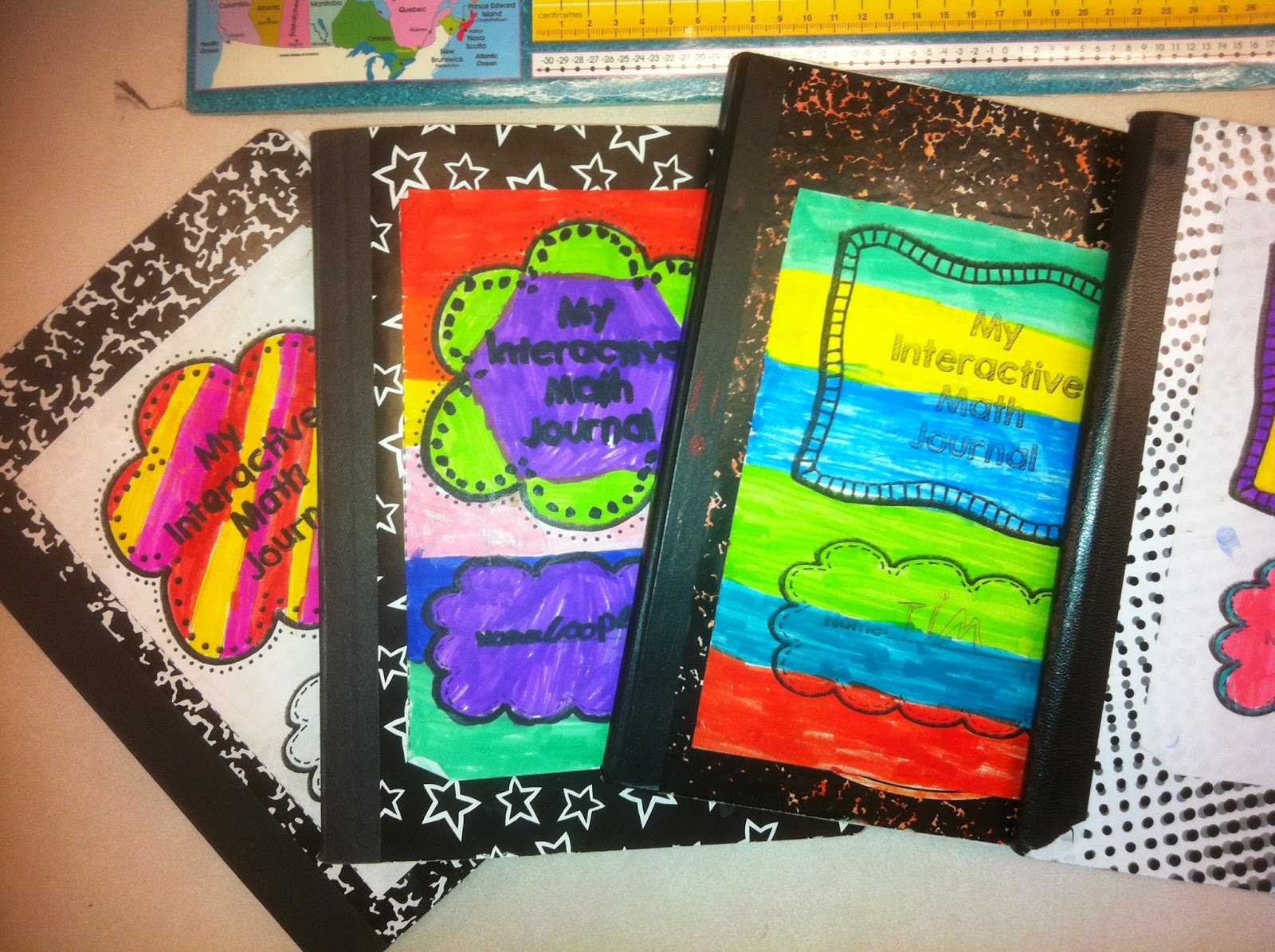
I can't believe it is March already!  I guess time flies by when you are having fun.  I don't know about you but every year I decide to try a few new things in my classroom.  This year I jumped on the interactive notebook/journal bandwagon in a big way!  I use those words interchangeably but I know some teachers may see them as two different things.  For me an interactive notebook/journal is a place for students to keep notes, practice skills and reflect on what they are learning in class.  I started slow at first with just using an interactive notebook for some of my social studies topics but then when I saw how much the students enjoyed working in their notebooks, I decided I had to use one for  math.  I thought in this post I would share with you some insights and offer you the tops tips that I have learned from incorporating math notebooks/journals into my classroom.  You may like to give them a try in your classroom.  

Tip #1   Buy composition books during the back to school sales at the dollar store.  I bought most of mine at the Dollar Tree while on holiday this past summer.  I stuck them in my suitcase and brought them back to Canada.  Needless to say my husband thought I was a bit crazy! 


Tip #2  Store them in baskets somewhere in your classroom.  I had them in my students' desks the first week and they used to get lost in-between their other supplies.  I only let my notebooks go home the week before a math assessment or if I feel a student will benefit from some extra work on a particular topic.  Students know to bring them back and I have always had them returned.  At our school we give out "Panther Paws" (Our mascot is a panther), which is a paper reward slip that can be entered in a draw for small prizes.  I sometimes reward students who bring back their notebooks with a "Panther Paw" for being so responsible with their school materials.  This little incentive has worked wonders so far.


Tip # 3  Make a pocket to attach to the front or back cover  that can be used to store the sheets or fold-its that do not get completed.  There will always be someone that needs a bit more time.  I used old envelopes that I had in my class and I sealed them, cut an opening in the top and attached them to the front cover.  


Tip #4  White bottle glue is better than a glue stick for attaching paper to the notebooks.  The glue from the glue sticks dries out and the paper then falls out of the notebooks.  Students will need to be shown how to glue.  You wouldn't think that is the case with fifth graders but take it from me they need a bit of instruction. I didn't realize how much glue students put on everything until I started math notebooks. The first few days there was glue going everywhere and I could not believe how many pages became stuck together. Yikes!!  I now love to hear my students using phrases such as, "No toaster strudelling" and "Use baby dots".   Here is a nice poster I found on Pinterest that helps to teach about using glue.


Tip # 5  Set up more than one page at a time.  One of the biggest time wasters I found in the beginning was waiting for students to get everything ready to start making the pages for their notebooks.  It would easily take my class ten minutes at the start of the period to get ready with the needed supplies.  Once everyone has their sheets, scissors, and glue out ready to go make a couple of pages that you will be using over the next couple of days.  For example, I set up all my multiplication pages during Monday's math class and then the rest of my math classes for the week would be spent on completing the different pages.  No glue or scissors needed only a pencil!


Interactive Math Journal for Operations

Tip #6 Make a model interactive journal to show students.  Some students may need a visual model of how the pages fit in the book or how a certain sheet needs to be folded.  Although it may be time consuming in the beginning it will save you so much time in the end because you will not need to repeat instructions over and over to your students.   I am a very visual learner and so are many of my students and the model makes notebooking easier. 

Interactive Math Journal for Place Value

Tip #7  Encourage students to help each other.  I always look for volunteers to help complete the notebooks for students who have been absent or are away on a holiday.  I wouldn't want students to come back and be overwhelmed with trying to cut, fold and glue all the missing pages.  Some students find the pages easier to complete than others and it has been refreshing to see them help their fellow classmates create a notebook that they too can be proud of!


I hope these tips help you if you decide to try using an interactive notebook or journal.  There are so many positive things that have come from introducing this tool into my classroom.  For instance, when I have math workshop and I am busy with a small group I will often see a student go and get their notebook to use as a reference tool instead of coming to find me.  When a parent emails to say they are not sure what we are doing in math I can send home the notebook with the student and it helps the parent to see how we are teaching a particular skill.  This is so important now as many topics such as multiplication are being taught very differently with strategies that parents may not have seen when they were going to school.  I have another student who works with a tutor and the tutor is able to use the notebook as a reference tool and review the skills in the same way as I have shown in class.  

I would love to hear about your experiences with using interactive notebooks/journals.