Pages

Showing posts with label elementary. Show all posts
Monday, February 17, 2014

Mini-Moments #2 ~ tiny teachable times

Hi there!  It's Lisa from Second Grade Stories... although there haven't been many "stories" to tell around here lately, considering we've barely been in school!  I went back and figured out that since Christmas break - waaaaay back on Dec. 20, we haven't been in school a full week... nope, not once.  There have been delayed openings, early closings, holidays and just plain snow days.  All of this missed time makes every minute we're with our kiddos important.  This brings me to

graphics by Krista Wallden; fonts by KB fonts and Hello Literacy

I blogged once already over at my place about ways to enrich your morning calendar time with TONS of math practice.  Today we're going to focus on how to get the most out of lining up and waiting (in line to leave the room, to go into an assembly, for specials to start...)

1.  Line up with "oral" exit slips.  I know many teachers use exit slips - written answers to short questions - as a way to end the class.  And I use them, too.  I'm especially fond of post it notes, which I can organize and save for future planning.  But sometimes - especially in the lower grades - writing ANYTHING down is another 10 minutes process.  So, I ask students to respond orally, as they line up.  For example, when the objective for the lesson was to distinguish between fiction and nonfiction texts, everyone lined up one at a time by telling me one text feature for fiction or nonfiction.  We've lined up (or put away Daily 5 books) by sharing what the setting was from the story, naming a character trait and giving support, whatever goes with your lesson.  The same is true for math.  Ask students to line up by giving you a number with 6 in the tens place (you can differentiate by asking for 2,3, or 4 digit numbers), ask for a subtraction sentence with a difference of 8, a key word that tells you are adding in a word problem, etc.  The possibilities are endless!  And sometimes it really is eye-opening to know who can answer when you're discussing in a group, and who has trouble when they're put on the spot. 

You can use this strategy when you have a few minutes waiting in line, as well.  Ask everyone to name a famous American, something that is a liquid, an even number bigger than 50.... anything you want.

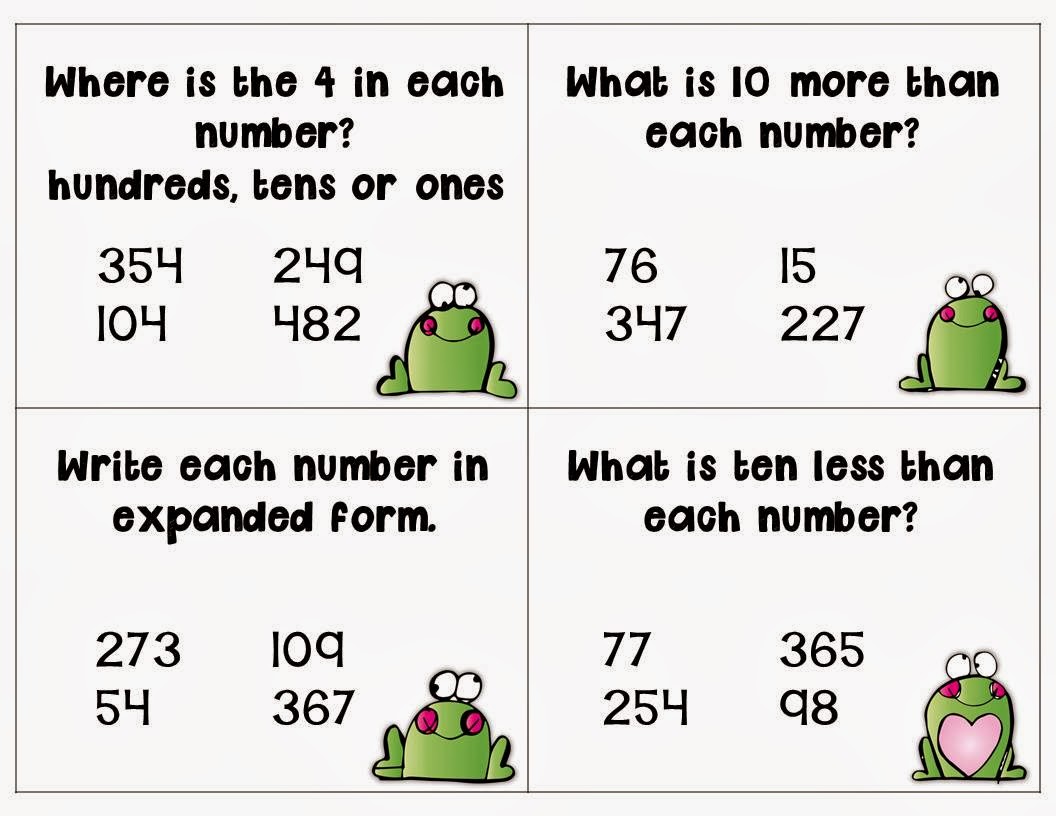
2.  Task card questions:  This one can be used as you line up, or while you are waiting in line to leave for an assembly, while everyone gets back from the bathroom, etc.  I always have a set of task cards on a ring by my door.  One is math and one is grammar/spelling/phonics.  When we have a couple minutes in line, I'll take them out and ask the question.  EVERYONE is responsible for thinking of the answer.  Sometimes I'll hand a card to each student (you can differentiate again here, depending on the card you give a particular student) and have them give me the answer.  (You can do this as they line up , as well!)  I keep one set of cards for each month.  I haven't used them for a full year yet, so I cant say if last year's February ones work for this year, but it's easy to go in and change the question on the cards to match what we are learning about or need practice in.  I'm sharing my February cards below, just so you can get an idea of what they are like.  maybe they'll work with your kiddos!  Click on the image to download.
https://drive.google.com/file/d/0B2ize_mAbVGMbTRQUFQ1Q3VkLXc/edit?usp=sharing


3.  And, Not and Or:  This one is not related to a specific academic skill, but it is an important language skill - and gets students to listen carefully, too!  I use it mainly to line up.  I know many teachers use statements like, "Line up if you are wearing a blue shirt," to keep everyone from getting in line at once.  I take that a step further - how about, "Line up if you have a dog AND it is small."  Or, "Line up if you have a tv in your kitchen, but NOT in your bedroom."  You can make the statements related to the season, holiday, a topic or just random.  It's a great way to also find out more about your students - something that is so important.  When you do this with math, it opens a whole new area.  For example - "Name me a number that is even AND is greater than 50," or "Name me a number that has an 8 in the ones place OR the tens place."  Lots of thinking going on here!

4.  Silly Voices:  This one is a quick and easy activity for when you have an extra minute or two, but not enough to do something more in depth. It's simple - but it probably ranks as my students' favorite "mini moment" activity.   Give students a task, and have them respond in a silly voice.  Try, "Count by 10's starting at 42 in a robot voice."  Or, "Spell ____ in a mouse voice."  Students can respond in unison, or you can ask specific students to do a particular task.   If you can't think of voices off the top of your head, ask your students!  Or keep a list on an index card somewhere.

I hope I've given you a few ideas to get the most out of your "teachable time."  What creative ways do you have for those mini moments?


Saturday, February 1, 2014

Word Walls Across the Grades


Before I get started with all the goodies, let me introduce myself... I am Terri from Terri's Teaching Treasures.
This is my 9th year teaching and I have taught every grade from 1-7 and had a part-time contract in Learning Assistance. I definitely feel at home in a grade 4 or 5 class but there are many perks to each grade I have taught.

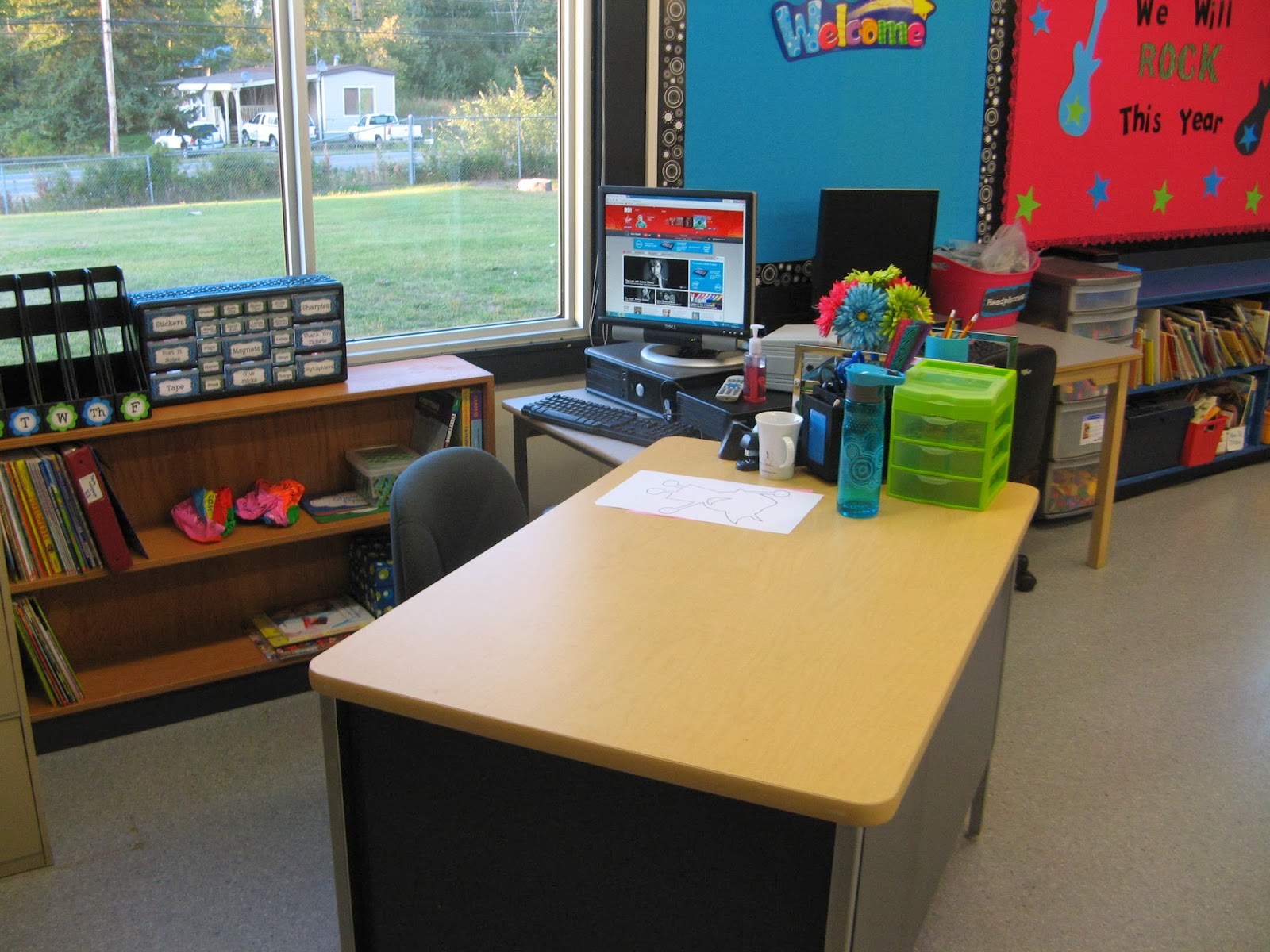
Currently, I am teaching a lively group of grade 2/3s at a school close to my home (yay I save on gas!!!). This is my third time teaching at this particular school but this time there are a bunch of new-to-me faces. I love getting to know new coworkers and collaborating with them to make the school environment fun and engaging. They quickly saw that I am a little obsessed with having my classroom look put together (my son calls it a sickness) and that I like to make things look inviting. Everything has to be color coordinated (shhh don't tell anyone but I actually turned down some plastic bins because they didn't match my classroom colors..shhhh). In case you are wondering here are a couple pictures of my overly coordinated classroom. Yup even my water bottle matches my colors :)

Since I have been in many different grades I have had to adapt how I use word walls in my classroom. Since I have pictures (another obsession... I take pictures of EVERYTHING) of both of the word wall formats I use I thought I would write my first blog post here about them.

The first type of word wall here is what I use when I am in a primary classroom. It is your typical "display the alphabet and add high frequency words and student names above the alphabet" type of word wall. I find that in my school district the primary classrooms  tend have more space and therefore more wall space for a word wall. I have not had the same word wall design/colors yet as I always change it to match my theme. This year I have gone with a bold color theme to match my book baskets and my word wall labels had to match so I created simple turquoise and lime green labels. If you are looking for this type of word wall and you like the colors just click here to get them for free!!!

When I was working in intermediate grades, I didn't think it would work having your typical word wall for two reasons. 
1) There is less space and more words students use.
2) Students may feel this is babyish.
 
I am not sure how I thought of this idea but I wanted a way for student to use the proper spelling of words without constantly asking my for it (you can only spell "awesome" so many times for students) and we had a lack of dictionaries for them to use. This is when my word wall was transformed. I have an index card box with index cards labelled with the alphabet. One letter per card. When a student asks for a word to be spelled they have to help me figure it out and it gets written on the appropriate index card. Before students can ask me for a word they must check the box (finding the right card) and only if the word is not on the index card will I write it on it. At the beginning of the year there are a lot of words being written on the cards but later on they have written a lot of the words they frequently use. It is great getting through an entire writing block and not having anyone ask how to spell a word.
 
I think this approach allows students to be more independent writers and it gives them continual practice at putting letters in alphabetical order as the cards are store alphabetically.
 
Here is a bonus tip on how to make writing times more successful. I post weekly writing prompts in my classroom in order to give students thinking time about a writing topic. I know that I have a hard time writing on the spot and have way more ideas if I have time to think about what I am writing about. They have notebooks they can jot down ideas throughout the week and then when it is time to focus on the writing topic they have already done a great deal of their brainstorming!
Well that is it for now. I am super excited to be apart of this wonderful blog and I cannot wait until I get to post again next month!!!
 
Cheers,


Thursday, January 2, 2014

Surviving After Winter Break


Happy New Year to you! I am Jasmine from Buzzing with Mrs. McClain and I'm so glad that you're here.

I'm sure that you are at the end of your Christmas Break/Winter Break. Like many teachers, you may have planned for all of the great things you'll do for the rest of the year, especially for the first week back. Or...perhaps...you haven't! Don't you fret one bit. I'm going to offer you some suggestions to survive the first week back after winter break. I am in love with Pinterest, so all of my ideas were discovered while searching there. I've pulled ideas specifically targeting the New Year. They include crafts, bulletin boards, and writing activities.

Here are 5 things that you can do with your students during the first week or weeks after winter break...

#1-Plan book goals for 2014...pinned by Charity Preston
The first idea was originally created for 2013, but it can work perfectly for 2014 too. It is a bulletin board idea to encourage your students to read throughout the year. There are so many ways to modify this for your students and grade level. Of course it would read 14 books in 2014 or maybe another goal that you set for the class or each individual student. Better yet, you can have your students think of their own goals to reach.

#2-Start on the right foot...pinned by Erica Bohrer
I like this idea because it is simple yet fun. Erica sells this in her store, but you can certainly create this on your own or have your students create this using a few materials. Students create the front cover and then write down a few things they will do to "get on the right foot." You can have your students create this, and then post it in the classroom or let them put it in their quality binders. It can serve as reminder to them to strive for the goals that they set.

#3-Make resolution wreaths...pinned by Paula Saul
This is another New Year's activity that your students can make to share their resolutions. Again, I love how writing is incorporated!

#4-Compare and contrast the U.S. and Chinese New Years . . . pinned by Pam Costello: 
I found a picture of this Venn Diagram and thought that a cool idea would be to have your students research the Chinese New Year and do activities to compare and contrast our new year to theirs. There are tons of things that you can do to extend a study on the Chinese New Year and the U.S. New Year.

#5-Read books about New Year's...pinned by Erica:
What better way to get your students energized for the new year than to read a few books! Search your school's library to see if you have any of these books so that you can read them to your students.


To add one more suggestion for you, I have a freebie in my TpT store that you can do with your students. It's a simple writing activity where your students can discuss their New Year's resolutions.


Thanks for reading! See you next time!