Pages

Sunday, March 22, 2015

Spring Fun

Its been a long winter and we are so excited to welcome Spring this week!
One thing that has helped my firsties this very long winter in New York has been Go Noodle!  This website is amazing!  We exercise along with Maximo several times a day.  This keeps my class excited and full of positive energy.  If you haven't tried this yet you must!  Check it out here:
https://www.gonoodle.com/

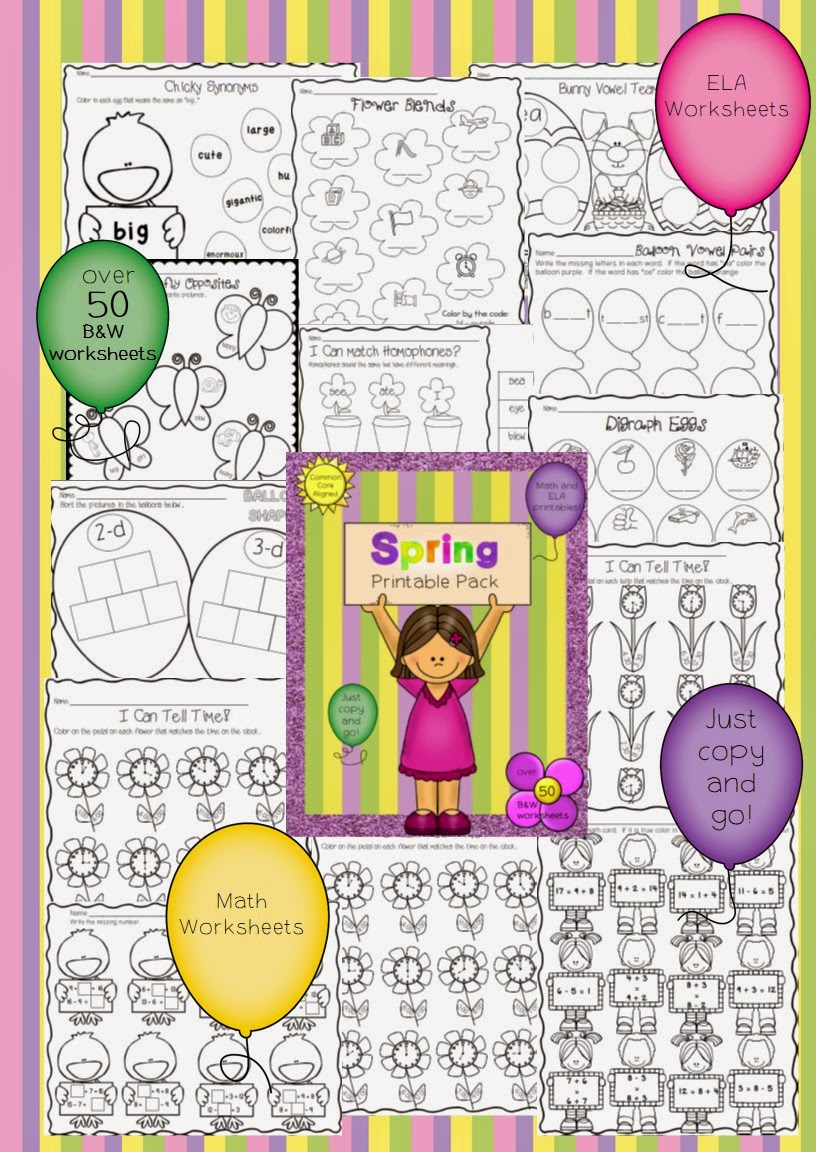
To help with some great Spring activities I made this Spring Printable Pack which is full of more than 50 black and white activities all common core aligned.  These are perfect for morning work, centers, homework, small group, whole group, re-teaching, enrichment and more!
Here are some examples of activities you can find in this pack:
https://www.teacherspayteachers.com/Product/Spring-Printable-Pack-Over-50-Printables-to-cover-tons-of-ELA-and-Math-Skills-1173746
To purchase this pack click on the picture or you can click here.
 
I also like to help my students master the difference between real and make believe.  Here are two fun packs to help your young learners have fun while learning this important skill.
https://www.teacherspayteachers.com/Product/Bee-Real-or-Make-Believe-Activity-Pack-711095

https://www.teacherspayteachers.com/Product/Ocean-Animals-Real-or-Make-Believe-Activity-Pack-711108
 
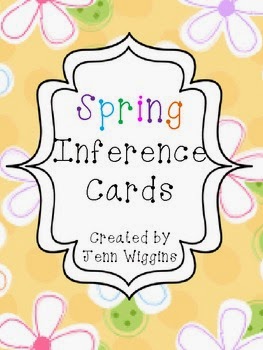
Another fun activity is Inferencing.  This pack includes several Spring Inference Cards that I promise will have your students enjoying this challenging skill.  Plus the pack includes templates for students to create their own!
https://www.teacherspayteachers.com/Product/Spring-Inferencing-Fun-668792
These activities will definitely help bring excitement into your classroom this Spring!
Thank you!
Jenn Wiggins
 
For more activities visit my TPT Store by clicking here.


Saturday, March 21, 2015

Improving Handwriting

Hi everyone!  I'm Amy from Cahill's Creations and I'm here to share some tips on how to improve handwriting.   I'm a kindergarten teacher and we are the foundation for teaching kids how to hold a pencil, form letters correctly, and begin to write!  These skills are so important to learn in kindergarten.  Most of my kids are doing great with handwriting, but there are still a few that need some extra help with new strategies.

So, I did a little research and found some paper on Amazon that would be helpful to these kids.  It's highlighted, which allows the kids to focus on forming the letters correctly and gives a guide for writing.  I noticed a big improvement with one of my kids and will continue to use this type of paper for writing.

http://www.amazon.com/Abilitations-Integrations-Hi-Write-Beginner-Paper/dp/B0042SWVIU/ref=sr_1_1?ie=UTF8&qid=1426909978&sr=8-1&keywords=highlighted+paper


I sent a bunch of this paper home to practice writing at home too. 

I also created some handwriting practice pages to help with letter formations.  I sent a bunch of copies home and I put them in protective sleeves to save paper.

https://www.teacherspayteachers.com/Product/Handwriting-FREEBIE-1751151

Check them out to see if you can use them too!


https://www.teacherspayteachers.com/Store/Cahills-Creations


Friday, March 20, 2015

Organizing Parent Volunteers

Hello! I'm Marissa from Inspired Owl's Corner and I'm excited to share some ideas I have for effectively using parent volunteers in the classroom. Many of my ideas regarding volunteers are nothing new, but I'm always surprised when I talk to other teachers about volunteers and they tell me they have nothing for them to do. I always have a ton for my volunteers to do! I could not do what I do without their daily help.

My first 5 years of teaching was in 7th grade, and parents did not volunteer to help in the classroom. It wasn't until I taught fifth grade, that I started getting parent requests to help in the classroom. At first I was overwhelmed with the idea of having another adult in the classroom- I was used to being alone in my "Queendom" with my students and I wondered if they would critique my teaching? What would they think of my classroom management? Those feelings quickly passed, and I became comfortable with them helping in the classroom. For the next 5 years, I had parents filing my papers, stapling packets, and correcting tests. It wasn't until I moved down to third grade and the district decided to do away with class-size reduction almost 6 years ago, (I went from 20 to 32 students!) that I came to the conclusion I could not effectively teach the way I was used to without a lot of help from the parents. I was really concerned about those students who would fall through the cracks because I wouldn't be able to give them as much one on one attention with over 50% more students added to my class! 

I started off by eliciting parent help. I recruited them at back to school night with a sign up sheet. Parents worked or had little ones at home? No problem! I asked them to invite a grandparent or even a neighbor to help. I gave each volunteer a day and time, and I planned my teaching and groups around the times they would be there. I had multiple parents in my classroom, sometimes two at a time! 

Here are some ideas that you might find helpful for using and managing volunteers that have worked wonders in my classroom:
1.  Basic Facts Practice:  After assessing students' basic facts knowledge, I create a list of students who need extra practice. I have my parent volunteers quiz my students on their basic facts and keep a check off list of those who need continued practice. The volunteer makes flash cards on a ring for the students and that becomes their personal set to study. 
2.  Fluency Practice:  My students are assessed on fluency. After an initial assessment, I compile a list of students who need extra practice, and the volunteer call them back one at a time to work with them. The students are not pulled back for very long, so they aren't missing too much valuable instructional time. Every year I have one or two third graders who can't decode and don't qualify for any extra services,  so the daily reading practice really helps them!

3. Comprehension Practice:  My lower level students get called back one at a time for more intensive reading practice. I train the parent volunteer to help the students with their reading and comprehension skills. 
4. High Frequency Words: Every year, I have a few students who need help with this. I have my volunteers call them back and help them practice their sight words. New sight words are highlighted with a different color and dated, so I can check their progress.
5. Spelling and Vocabulary Practice:  If I have students who did not pass their weekly tests, they get called back to review the words they missed the previous week, and practice the current week's words as well.
6. Test Review: Students who did not pass their weekly tests get called back to review incorrect answers. The students use a Test Repair Sheet and correct each mistake on their test. The parent volunteer is there to help guide them if necessary. The half sheet is stapled to the front of their test.
7. Literacy Groups/Rotations:  On Wednesdays, I have two volunteers. One works with third grade students who need extra practice with grammar, spelling, and vocabulary, the other works with second grade students on the same concepts, and I work on close reading skills with a small group. The other students are working independently on Daily 5-type activities. Then we each rotate groups two more times. This is my favorite hour of the week! All students are being supported with the extra help they need. 

To me, the key to using volunteers effectively is to be very organized. One year I had a dad who worked odd hours, and he would pop in at random times. While this was a bit annoying and disruptive, I didn't want to discourage him from coming, because I really needed his help that year. To make it work, I started to have basic facts practice sheets prepped in a basket and fluency practices on a clipboard ready for him to grab and start calling students back. Instructions, materials, and supplies are always set out in the volunteer's usual spot so they can come in and get started without interrupting my teaching.
I like to make sure I have other things for my volunteers to do during those times that I need the whole class's attention. I always have assignments that need to be corrected, laminating that needs to be cut out, packets to be stapled, or papers that need to be filed. 
As you can see, volunteers have greatly benefited my students (and me)! The extra help they are getting and one on one time make a huge difference in their learning, especially for those who really struggle. The volunteer documentation I keep is also helpful when I have serious concerns about a student and have to refer them to an SST. Everyone present  at the meeting can see the extra assistance the student is getting, and the ball often moves faster to get that child assessed if needed. 

I know having volunteers in the classroom isn't for everyone. It took me years to get really comfortable with it and put a system in place that works for me. When you walk into my classroom, it's not uncommon to see a volunteer at the back table working with a student on comprehension practice, and another at the side table working with a small group on grammar, while I am teaching the rest of the class up front on the carpet. Sometimes it gets a little noisy, but we get used to it. If you haven't enlisted the help of volunteers, give it a try and watch how much your struggling students grow from all the extra support!

I have included a volunteer pack to get you started, if you like! This pack includes a volunteer questionnaire, a volunteer schedule, a volunteer lesson plan sheet, and a few other printables, including a cover and sections so you can make your own volunteer binder. I am making it free for a limited time and you can find it by clicking on the pictures below. I plan to add to this and would love to know if there are other forms or sections you are in need of. Below is a preview of the file, and you can click on the pictures to download it. 
I also have some end of the year ideas for volunteers on my blog. The labels in the picture below are freebies in my store. Click on the picture to see them and download!  
I would love for you to stop by Inspired Owl's Corner blog or store for more ideas! 


Thursday, March 19, 2015

5 Ways To Use Trading Cards in Your Classroom

Hey everyone!  It’s Mr. Elementary and I’m stoked to be your guest blogger today on Who’s Who and Who’s New!  If you check out my blog or my TPT Store you’ll notice that I’m kind of crazy about educational trading cards! In this post I’m going to share 5 ways you can use them with your students.

What is an educational trading card anyway?
Educational Trading Cards are a fun and engaging way for students to learn new vocabulary and information in a way that that they’ll remember. Typically when I make educational trading cards they include the vocabulary word and a picture to represent it on the front; on the back is its definition and other facts or information to helps students remember it.  I always include a blank set of the cards for students to add to or create their own.


Here are 5 ways you can use them in your classroom!

1.  SMART Board or Projector: Project just the picture up on the wall and have students determine the definition using the pictures and their background knowledge.  Then, scroll down and review the actual definitions.

2. Positive Reinforcement: Pass trading cards out as (educational) rewards during a unit.  In GLAD you choose students to be “scouts” who look for classmates exhibiting positive behavior while you’re teaching and they get to reward the cards to their classmates.


3.  Memory Matching Game: To play this game, simply print the fronts and the backs of the cards out single sided and have the students, or yourself, cut them up.  Have students pair up, shuffle the cards, and lay them face down in rows.  Students can then play memory with the cards by taking turns flipping them over until they find a match (the picture side of the card and the definition side).  Once they find the match they get to keep those two cards.  Whichever player has the most cards at the end of the game wins!

4.  Challenge Activity: Trading Cards are EASY to differentiate.  If a student doesn’t find the vocabulary challenging enough they can simply find more vocabulary words along the same subject and create their own trading cards to go along with them.

5. Homework: After you have introduced a new set of vocabulary trading cards to the class you can send the blank cards home as homework for students to work on. Families will think they’re a fun alternative to the traditional worksheet style of homework and may be more likely to get involved.


If you’re interested in more ways you can use educational trading cards with your students download my FREE Trading Card Manual!


Here are some free sets of trading cards to use in your classroom today!


Happy Trading!


Wednesday, March 18, 2015

Top 5 Classroom Activities for the Madness of March Basketball!


It's that time of year when students, and teachers get excited for the college basketball tournament. We have our Top 5 ideas for you to incorporate basketball into your classroom.

1. Have a Shoot Out
Yes, that's right. Students will have a shoot out in the classroom! Have each student crumple a piece of paper into a ball. Then, have a garbage can placed about five feet away. Have students compete against each other. You could even make a bracket for this! Then when are down to the final four, make it a big deal and announce their names like an announcer would do at a game. When the winner is found, crown him/her the shoot out champ!

2. Cinderella Story
Every year in the tournament, there is a team that wasn't expected to make it. Or there are teams that beat a higher seed in the first few rounds. Have your students think of other Cinderella stories where people overcome obstacles. This may involve some research using trusted websites. When the students have gathered their information, have them write a "Cinderella Story" about overcoming the obstacle.

3. Geography
For a fun activity, you could give the students the lists of the teams in the tournament. Then, with a blank United States map, they would have to find the city and state of each team. You would need to use a website that would have this information such as: http://www.ncaa.com/ and search for the school in the search bar. This would be a great way for the students to practice their geography skills!

4. Buzzer Beaters
Students love to compete against the clock. Have a timer or some sort of buzzer in your classroom. Then come up with some fun activities to see if students can do them in the allotted time. An example could be, sharpen 5 pencils in a minute, or see how many times they can write "Buzzer Beater" on their papers in a minute. Fun, and exciting for the students.

5. Teamwork
Playing a team sport like basketball requires working together and complimenting each other's talents. Take some time during a day this week, and stop what you are teaching. Have a beach ball on hand that is full of air and ready to go. Divide your class into teams of 3-4. Then get a stopwatch and time how long each group can keep the ball up in the air without hitting the ground or any other object. Have a timer keep track on the board. Then do a second round to see if the team can improve their time. Your class will love it!

We hope you enjoyed our Top 5 list. For other printable activities that you could use that are classroom ready for a small fee, click here.


Tuesday, March 17, 2015

Are You Game? Mastering Multiplication Facts with Games!

Hi Everyone,
It’s Teresa here from
Fun Games 4 Learning. As you can guess from my blog name and also my
TpT store, I am all about games.

I love using games in the classroom especially for math!


It is wonderful to see kids so enthusiastic about a game that they don’t even realize that they are learning and applying math skills

Today I would like to share some of my
favorite games that I use for reinforcing multiplication facts.

As children play it is amazing how quickly they develop an instant recall of their basic facts. My favorite games are those that are quick and easy to prepare and quick and easy to play. The first one I have to share with you is a game that I call Find It First.

FIND IT FIRST
Find It First is a simple game that can be used to practice many different skills. It is a quick game for 2 players. Once the first round is over, 2 new players can take their place.


On
the board or a piece of card write the answers to the facts that are to be studied. For example, to study multiplication facts for 7 write the answers randomly over the board or card. I then add a few random numbers also. I like to use a small whiteboard.

Make sure the numbers are where the children can reach them with a pointer or a ruler. The two players then stand either side of the numbers. The caller or the teacher calls a number fact, e.g. 4x7. The first player to find the answer and point to it scores a point. When we play it in the classroom, the first player to score 3 points is the winner. After that we choose two new players.

The kids really love this fast paced game.
 
Another favorite for basic facts is a simple domino game.

DOMINO KEEPERS MULTIPLICATION
This is a game for 2 players. All of the dominoes are placed face down in the centre. Both players pick up a domino at the same time. Each player multiplies the numbers on their domino and the player with the highest answer keeps both dominoes. If both players have the same answer, each keeps a domino. The winner is the player with the most dominoes when all dominoes have been used.


This game ticks all of the boxes - the kids love it, it is simple to play and all you need is a set of dominoes!

I also have many printable games that can be used for multiplication facts.

NO PREP MULTIPLCATION GAMES 
These no prep games are really popular with the kids and also the teachers. Many teachers use them for homework and have the parents play the games with their children. All the kids need are pencils and some games require dice.

The games are ideal as a math center or as an activity for fast finishers.

There are some freebie games for you to try at http://www.teacherspayteachers.com/Product/Multiplication-1199527 . 


There is a larger collection of 26 no prep multiplication games available at http://www.teacherspayteachers.com/Product/Multiplication-Games-1197085


You will find that the games are differentiated so that you can have some children working on times 2 facts while others are challenged by harder facts.
In these games the 2 players compete to either make the longest line or to make four in a row. There are also games where players have to find a line of 3 numbers that can create a multiplication family, e.g. 9, 4 and 36. I love the challenge of this game as it really does make the kids think and apply their facts.


Well Happy Multiplying! I hope you and the kids enjoy these games!

Till next time!
Teresa